info@sandoglo.co.za

Preventive Maintenance Checklist for Commercial Buildings
A practical preventive maintenance checklist for commercial buildings, with monthly, quarterly and annual tasks plus budgeting tips.
Key takeaways
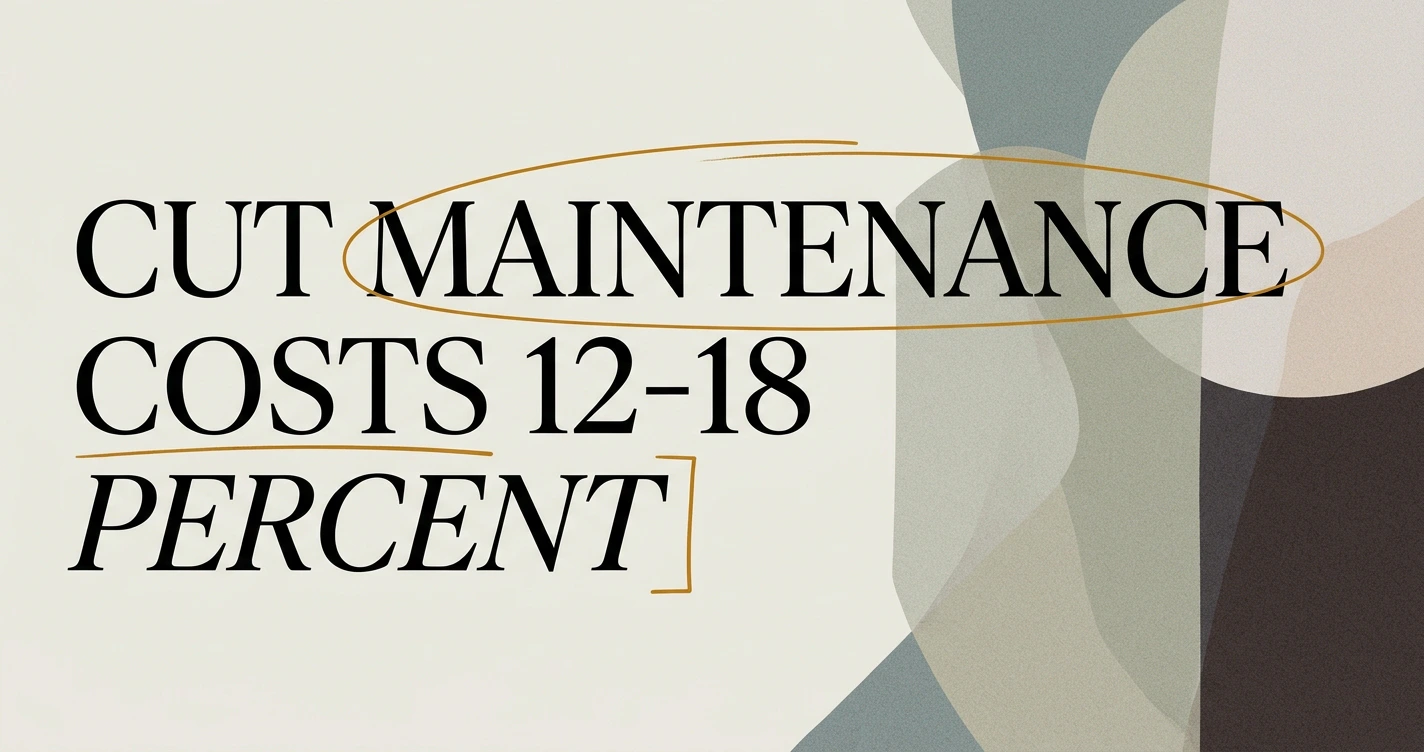
- Preventive maintenance can cut maintenance costs by 12% to 18% compared with waiting for things to break (U.S. Department of Energy).
- Split the work into monthly, quarterly and annual cycles so no system, from roof to electrical panel, goes unchecked.
- Deferred maintenance compounds fast: the U.S. National Park Service carried a $24.237 billion repair backlog at the end of FY2025.
- Write every inspection down. A dated record turns a checklist into an audit trail and a budgeting tool.
- Budget preventive maintenance as a fixed percentage of asset value, not as leftover money after emergencies.
A preventive maintenance checklist is a scheduled set of inspection and service tasks that keeps a commercial building's roof, HVAC, plumbing and electrical systems working before they fail. Group the tasks by how often they are due, then write down what you find each time. That habit alone separates a building that ages gracefully from one that lurches between emergencies.
This guide gives you the checklist by system, the monthly, quarterly and annual cadence, and a simple way to budget the programme. It is written for South African facility and operations teams managing commercial or industrial sites.
Why Preventive Maintenance Beats Reactive Repairs
Preventive maintenance saves money. The U.S. Department of Energy found that preventive programmes cut maintenance costs by 12% to 18% compared with reactive, run-to-failure repairs (U.S. Department of Energy FEMP O&M Best Practices Guide). The reason is simple: planned servicing is quieter, cheaper and scheduled, while a breakdown brings emergency call-out rates, damaged stock and tenants who want answers.
Reactive repair also hides a second cost. When you defer upkeep, small faults grow into capital projects. The scale of that trap is visible in public data: the U.S. National Park Service reported a deferred maintenance backlog of $24.237 billion at the end of FY2025, spread across more than 70,000 assets (U.S. National Park Service). A commercial building follows the same curve on a smaller scale. A blocked gutter becomes a leaking roof, then a rotted ceiling, then a closed floor.
Preventive maintenance flips the pattern. You trade a predictable, modest annual spend for far fewer expensive surprises, longer equipment life and a safer building for staff and visitors.
What Goes on a Monthly, Quarterly and Annual Schedule?
Group tasks by frequency so nothing slips. A good building maintenance plan runs on three clocks: a fast monthly loop for safety and consumables, a quarterly loop for servicing, and an annual loop for deep inspection. The same logic that keeps public estates from sliding into multi-billion backlogs, such as the near $100 billion of deferred work Pew identified across state-owned buildings, applies to a single site: little and often prevents big and sudden (Pew Charitable Trusts).
Monthly tasks
- Test emergency lighting and exit signs.
- Check fire extinguishers are charged and in place.
- Inspect and replace HVAC filters as needed.
- Walk the roof perimeter and clear visible debris from drains.
- Look for new leaks, damp patches and cracks.
- Check that pumps, geysers and booster sets run without odd noise.
Quarterly tasks
- Service HVAC units: coils, belts, refrigerant checks.
- Flush and inspect drains and grease traps.
- Test backup generators and transfer switches under load.
- Tighten and thermal-check main electrical connections.
- Inspect door closers, seals and security hardware.
Annual tasks
- Full roof inspection, including flashings and membrane seams.
- Deep HVAC overhaul and efficiency check.
- Electrical compliance inspection by a qualified contractor.
- Water tank cleaning and plumbing pressure test.
- Review the whole asset register and update condition ratings.
Short monthly checks feed the longer cycles. If a monthly walk flags a worn belt, the quarterly service already knows to carry a spare.
Checklist by System: Roof, HVAC, Plumbing and Electrical
Each building system fails differently, so each needs its own checklist. Roofs fail slowly and quietly, HVAC fails expensively, plumbing fails messily, and electrical faults fail dangerously. Here is what to look for in each.
Roof
- Clear gutters, downpipes and roof drains before the rainy season.
- Inspect flashing around parapets, vents and skylights.
- Check membrane or sheeting for lifting, cracks or rust.
- Note ponding water: standing water signals a drainage fault.
- Confirm safe roof access and intact fall-protection points.
HVAC
- Replace or clean filters on schedule.
- Inspect and clean condenser and evaporator coils.
- Check refrigerant levels and look for oil stains that hint at leaks.
- Test thermostats and building controls against actual readings.
- Listen for bearing noise and check belt tension.
Clean filters and coils do more than prevent breakdowns. A fouled coil forces the system to work harder and burn more electricity, so HVAC upkeep is also an energy-cost decision.
Plumbing
- Test water pressure and check for slow drainage.
- Inspect visible pipes, joints and valves for corrosion and drips.
- Service pumps, booster sets and backflow preventers.
- Flush and inspect grease traps and drains.
- Check geysers and hot-water systems for scale and leaks.
Electrical
- Thermal-scan distribution boards for hot spots.
- Tighten connections and check for discoloured or burnt terminals.
- Test RCDs, earth leakage and circuit breakers.
- Inspect emergency and standby power systems.
- Keep the single-line diagram and load schedule current.
How Should You Document and Schedule the Work?
Document everything, because an undocumented inspection is one you cannot prove happened. Each completed task should record the date, who did it, what they found and what action followed. Over a year that log becomes an audit trail, a warranty defence and the evidence base for next year's budget.
Keep scheduling simple and visible. A shared calendar or a computerised maintenance management system (CMMS) can trigger each monthly, quarterly and annual task automatically and hold the history in one place. The tool matters less than the discipline: every task has an owner, a due date and a sign-off.
This is the point where many teams decide whether to run the programme in-house or hand it to a facility management partner. Sandoglo provides operations, maintenance and facility management services to commercial and industrial clients, which means the schedule, the inspections and the documentation sit with one accountable team rather than scattered across contractors. For a multi-site or mixed-use estate, that single thread of responsibility is often what keeps the backlog from creeping back.
How Do You Budget for a Preventive Maintenance Programme?
Budget preventive maintenance as a planned percentage of the building's replacement value, then protect that money. The common mistake is funding maintenance from whatever is left after emergencies, which guarantees the emergencies keep coming. Because preventive work trims total maintenance spend by double digits against reactive repair, the budget largely pays for itself over time.
Build the budget in three layers:
- Routine upkeep. The monthly and quarterly tasks: filters, servicing, consumables and labour. This is your steady baseline.
- Planned replacement. A sinking fund for predictable big-ticket items such as a roof membrane, chillers or a switchboard, each with a known service life.
- Contingency. A smaller reserve for genuine surprises, which should shrink as your preventive record improves.
Track actual spend against each layer and revisit the split every year. A new building skews toward routine upkeep; an ageing one needs a fatter replacement fund. The numbers get sharper the longer you keep good records, which loops you straight back to documentation.
Start with one honest walk-through of your site this week. List every roof, HVAC, plumbing and electrical item, assign each a monthly, quarterly or annual slot, and put the first round of dates on the calendar. That single afternoon converts a vague intention into a working programme, and it is the cheapest maintenance you will ever do.
Frequently asked questions
What is a preventive maintenance checklist for a commercial building?
It is a scheduled list of inspection and service tasks for a building's roof, HVAC, plumbing and electrical systems. Tasks are grouped by frequency, usually monthly, quarterly and annual, so each system is checked before it fails.
How often should commercial building maintenance be done?
Run quick safety and filter checks monthly, system servicing quarterly, and full inspections of the roof, HVAC and electrical gear annually. High-use or safety-critical equipment often needs tighter intervals set by the manufacturer.
Is preventive maintenance cheaper than reactive repairs?
Usually, yes. The U.S. Department of Energy reports preventive programmes save 12% to 18% over reactive maintenance, because planned servicing avoids emergency call-outs, secondary damage and unplanned downtime.
How much should I budget for building maintenance?
Many facility managers set the annual maintenance budget as a percentage of the building's replacement value and ring-fence it. The exact figure depends on building age, use and condition, so track real costs and adjust each year.
[…] and downtime from reactive repairs, then compare it against a fixed outsourced quote. A structured preventive maintenance programme is where outsourced providers often save the most, by catching small faults before they become […]